Mastering Client Relationship Management for Freelancers
When you hear "client relationship management," it's easy to picture big companies and complicated software. But for freelancers, it's something much simpler and far more personal: it's the art of nurturing professional connections to build a business you can count on.
It's really a shift in mindset. Instead of just completing tasks, you start focusing on creating positive, consistent experiences for your clients at every single touchpoint. This proactive way of working is what turns one-off gigs into the kind of long-term partnerships that build a stable career.
What Client Relationship Management Really Means for Freelancers

Think of yourself as a skilled gardener. Your clients are the seeds, and every interaction—from the first email to the final invoice—is a chance to give them the right amount of attention. The goal isn't just to get the job done; it's to cultivate those connections so they grow into strong, resilient relationships that bear fruit year after year.
This perspective is what helps you move from being a reactive, and often stressed, freelancer to a structured, confident business owner. Good client relationship management isn't about buying expensive tools; it's about putting thoughtful, repeatable processes in place.
From Freelance Chaos to Client Control
Let's be honest: without a system, managing clients can feel like juggling chainsaws. Important details get buried in endless email threads, payment reminders live on sticky notes, and you completely forget to follow up for more work. A little bit of structure, however, brings calm and control to the chaos.
This table shows the night-and-day difference between just winging it and having a real system.
| Area of Focus | The Chaotic Approach (Without CRM) | The Structured Approach (With CRM) |
|---|---|---|
| Communication | Scattered across emails, texts, and random notes. Finding key details is a nightmare. | Centralised notes and updates mean all critical information is right where you need it. |
| Onboarding | An informal, "let's just start" process that invites scope creep and misunderstandings. | A clear, documented process that sets boundaries and goals from day one. |
| Invoicing | Invoices are sent manually with hit-or-miss follow-ups, creating stressful cash flow gaps. | Automated reminders and clear tracking ensure you get paid on time, every time. |
| Opportunities | You rely on memory to check in for future work, often missing the perfect moment. | A system for tracking project cycles helps you propose new work when the client needs it most. |
See the difference? One path leads to constant firefighting, while the other puts you firmly in control of your business.
Why This Mindset Matters Now
Putting your clients first isn't just a nice idea—it's a smart business strategy. The market for Customer Relationship Management (CRM) software is booming for a reason. Here in Luxembourg, it's projected to hit US$83.53 million in 2025. That growth isn't just from big corporations; it's also fuelled by solo business owners and freelancers who realise they need a better way to manage their client interactions. You can read more about this trend in these insights on the Luxembourg CRM market.
This doesn't mean you need some complex, enterprise-level platform. It just underscores how vital it is to have some kind of system, even if it's a simple one, to keep track of conversations, manage payments, and build genuine loyalty.
The core principle is this: a happy client is your best marketing asset. They are more likely to pay on time, refer you to others, and return for future projects. Every action you take should aim to strengthen that loyalty.
At the end of the day, solid client management is your ticket to less admin, better cash flow, and a business that doesn't just survive, but truly thrives. Smart financial tools are a huge part of this puzzle, and you can discover more about how Billzy supports freelancers with simple, effective invoice tracking.
Why Strong Client Relationships Are Your Freelance Superpower
Let's be honest, putting effort into client relationships isn't just a "nice-to-have"—it's the engine that keeps a freelance business running smoothly. It's what turns a string of one-off gigs into a reliable, profitable career. When you get this right, the results show up directly in your bank account.
The core idea is simple: it costs far less to keep a client than to find a new one. The constant hustle for new leads is draining and expensive. By focusing on the clients you've already won over, you build a foundation of trust that naturally leads to more work and a much more stable income.
More Than Just a Paycheque: Boosting Your Revenue and Reputation
When a client genuinely trusts you, the whole dynamic shifts. You stop being just another freelancer on their list and become a valued partner. This trust doesn't just bring you more projects; it brings you better ones. Clients who are happy with your work are less likely to haggle over every penny because they're focused on the value you provide.
This shift pays off in a few key ways:
- Bigger Project Scopes: Happy clients will trust you with their larger, more important—and more lucrative—projects.
- Less Price Haggling: Once you've proven your worth, you're seen as an investment, not just a cost. This makes fee discussions a whole lot easier.
- The Best Kind of Marketing: A thrilled client becomes your best salesperson. They'll sing your praises to their network, bringing you high-quality referrals without you spending a cent on ads.
Think of it this way: your reputation is built one successful project at a time. Great client management ensures every interaction reinforces your value, making you the first person they call for the next job or referral.
It creates a fantastic cycle. You do great work, which makes your clients happy. They, in turn, bring you more great work, which cements both your reputation and your financial security.
The Real Value of Client Loyalty
Loyalty is more than just a buzzword; it's a tangible asset. A loyal client is essentially a partner in your success. They give you honest feedback, they understand how you work, and they're more likely to be patient if a small bump appears in the road. This teamwork makes projects run smoother and makes your work life far more enjoyable.
On top of that, these are the clients who will provide you with glowing testimonials and case studies. This kind of social proof is pure gold when you're trying to win over new prospects, as it shows you can deliver results and manage professional relationships well.
A Local Look at What Works
This isn't just a freelance strategy; it's a proven driver of growth across the board. Just look at Luxembourg's professional services industry. Major firms like EY saw an impressive 13.3% growth in 2023, and a huge part of that success was their focus on centralising client data to create personalised experiences. For a freelancer using a tool like Billzy, the parallel is clear: tracking payments and projecting cash flow builds the same kind of trust and transparency. Big local players are putting customer experience first, using organised client management to build digital trust and loyalty. You can read more about these insights into Luxembourg's professional services growth.
Ultimately, the payoffs from good client relationship management build on each other over time. You'll feel less pressure to constantly find new work, your average project value will increase, and you'll build a network that actively helps you grow. It's the surest route to a thriving freelance career.
The Building Blocks: Key Workflows for Your Client Lifecycle
Great client relationships don't just happen by chance. They're built on a series of thoughtful, repeatable steps that guide a client from their first email to their final payment—and hopefully, back again for more work. Think of it as creating a smooth, professional journey for every single project.
When clients know what to expect and when, trust grows naturally. Confusion fades, and the whole collaboration feels less like a transaction and more like a genuine partnership. These structured workflows aren't just about looking professional; they're your secret weapon for cutting down on admin, setting clear boundaries, and making your freelance business the one people are eager to work with again.
This simple visual shows exactly how solid processes create a cycle of growth, turning happy clients into your best marketing tool.
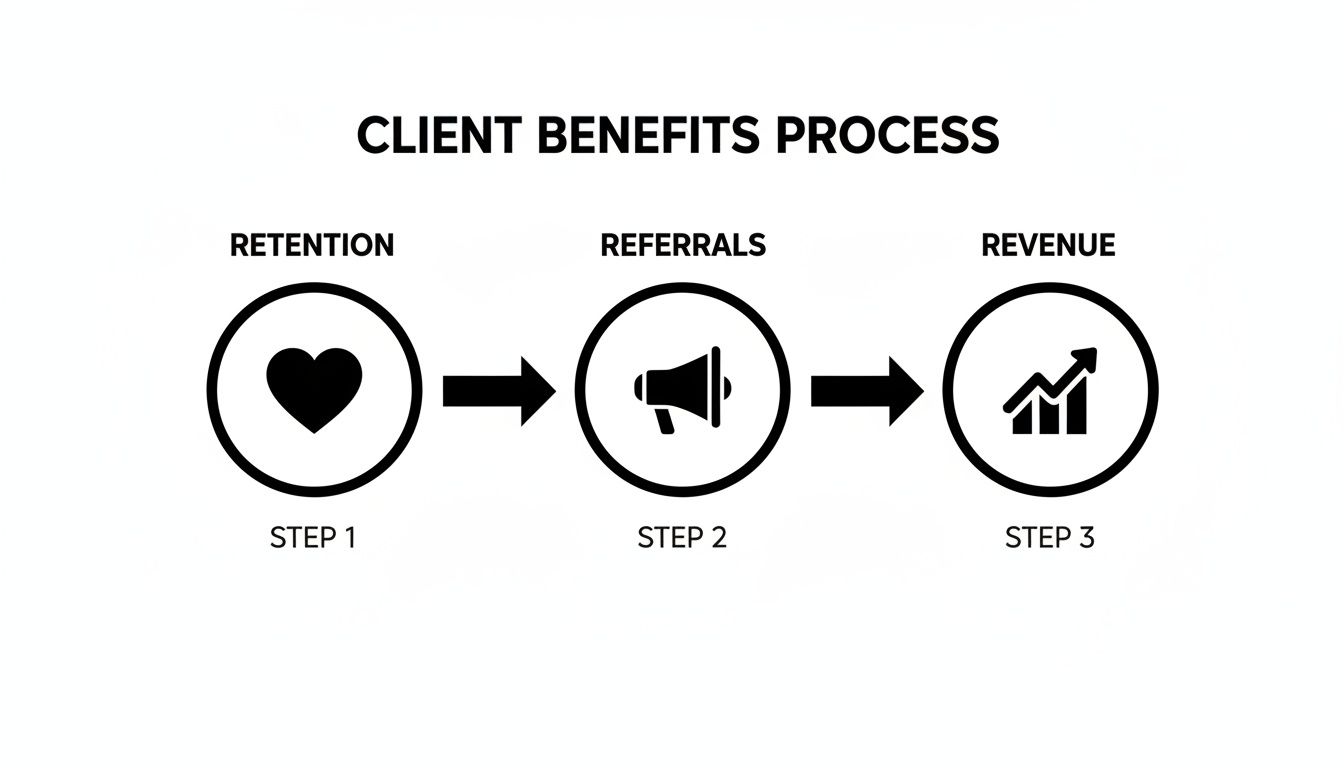
As you can see, keeping clients happy is the most direct path to getting referrals and boosting your bottom line.
Nailing the Onboarding Experience
How a project starts often determines how it ends. A messy beginning with vague goals is a fast track to scope creep and headaches down the road. A polished onboarding process, on the other hand, immediately establishes you as an organised pro they can trust.
The goal here is simple: make your new client feel confident, informed, and excited to get started. This is your moment to lock in project goals, define the scope, and clarify how you'll communicate.
Here's a simple checklist for a killer onboarding workflow:
- Get That Contract Signed: Before a single minute of work begins, make sure the agreement is signed by both of you. It's the single most important document you have. For more on what to include, check out this guide on freelance contract templates.
- Send a Welcome Packet: This doesn't have to be fancy. A simple PDF outlining key contacts, how you prefer to communicate (e.g., email over WhatsApp), and your typical response times works wonders.
- Hold a Kick-off Call: Use this meeting to walk through the project milestones, confirm deliverables, and answer any lingering questions. It gets everyone on the same page and builds momentum right from the start.
Putting in this effort upfront saves you from so many potential misunderstandings later on.
Mastering Project Communication and Feedback
Once the project is rolling, clear and consistent communication is everything. A client should never have to ask, "So... what's happening?" Proactive updates build trust and keep things moving forward without a hitch.
Find a rhythm that works for you both, whether it's a quick summary email every Friday or a check-in call every two weeks. This predictability is reassuring; it shows you're on top of things.
When it comes to feedback, you need to guide the process. Instead of getting random comments in emails, texts, and carrier pigeon messages, direct your client to provide consolidated feedback at specific points in the project. This prevents the dreaded "death by a thousand tiny edits" and keeps you on schedule.
Professional Invoicing and Getting Paid
Let's be honest, getting paid is the whole point. But how you handle invoicing and follow-ups says a lot about you as a professional. The process needs to be polite, clear, and consistent.
Sending a detailed, easy-to-understand invoice on time is step one. But the follow-up is where so many freelancers get squeamish. You don't have to. Taking the emotion out of it and turning it into a system is the key.
A polite, automated reminder isn't you being pushy. It's a professional process that helps your client's accounts team do their job. It shows you're organised and that you take your business seriously.
This is exactly what tools like Billzy are built for. They help you track what's outstanding and send perfectly worded reminders automatically, so you can protect your cash flow while keeping the client relationship positive.
Handling Scope Creep and Disputes Gracefully
Even with the best clients in the world, disagreements can pop up, and requests for "just one more little thing" are inevitable. How you handle these moments is what truly sets you apart.
When scope creep happens, you need to address it right away. Go back to your original contract and gently point out how the new request falls outside of what you both agreed to. Then, immediately follow up by offering to create a separate quote or add-on for the extra work. This respects their request while protecting your time and profit.
If a real dispute arises, stay calm and focus on finding a solution. Listen to their side, acknowledge their perspective, and work together to find a middle ground. A calm head in a tense moment can turn a potential disaster into a chance to show your value and actually strengthen the relationship.
Offboarding with an Eye on the Future
The end of a project isn't really the end—it's a massive opportunity. A professional offboarding process leaves a fantastic final impression and sets the stage for future work or referrals.
Your final workflow should look something like this:
- Deliver the Final Files: Package everything up neatly and provide clear, simple instructions on how to access it.
- Send the Final Invoice: Make sure that last payment is settled without any hassle.
- Ask for a Testimonial: The best time to ask is when the great results are still fresh in their mind. A simple, "I'd be so grateful if you could share a few words about your experience working with me," is usually all it takes.
- Plant the Seed for Next Time: Casually mention other ways you could help them in the future. Maybe it's ongoing support or a follow-up project.
This final touch brings the client journey full circle, turning a successfully completed project into your next big opportunity.
Building Your Simple Freelance Tech Stack
Good client management doesn't mean you need to splash out on some expensive, all-in-one platform. You can actually build a seriously effective and affordable system using tools you probably already know. The secret is creating a simple "tech stack" where each tool does one job really well. This way, you avoid overlap and keep things from getting confusing.
Think of it like building with LEGOs. You don't grab one giant, complicated piece. Instead, you connect a few simple, specialised blocks to build a workflow that's perfectly organised for how you work. This approach keeps your business lean, flexible, and so much easier to handle.
This strategy is especially smart here in Luxembourg, where businesses are quickly moving to cloud-based tools. With 85% of banks now using or planning to use Software-as-a-Service (SaaS) solutions, the trend is undeniable. This shift gives freelancers and small businesses access to professional tools that finally let us ditch the messy spreadsheets for secure, accessible data. You can dig deeper into these local banking technology trends to see how the whole market is moving.
The Three Core Components
Your simple tech stack only needs to cover three essential areas to keep your client management organised and running smoothly. Each part handles a specific piece of your freelance operation, making sure nothing falls through the cracks.
- Project Management Hub: This is your command centre for everything project-related. A tool like Trello, Asana, or even a well-structured Notion page is perfect for tracking deadlines, managing what you need to deliver, and keeping all the details in one spot. Its job is to answer the question, "What needs to get done and by when?"
- Communication Central: Stop digging through endless email chains. A dedicated tool keeps every conversation focused. For client work, this could be a shared Slack channel or even just specific discussion threads within your project management tool. The whole point is to bring all project-related chats into one place.
- Calendar for Clarity: A shared calendar is non-negotiable. Using something like Google Calendar or Calendly is essential for managing meetings, deadlines, and your availability. It cuts out all the back-and-forth of scheduling and gives clients a clear picture of your timeline, setting professional boundaries right from the start.
The Financial Cornerstone of Your Stack
While those tools help you manage the work, there's one critical piece that manages your income. This is where a dedicated invoice tracker like Billzy becomes the financial cornerstone of your client relationships. It's not an invoicing tool itself—it works with whatever you already use to create your invoices.
Its one and only focus is on that crucial stage after you've sent an invoice: making sure you get paid. By pulling every invoice into one place, it gives you a crystal-clear dashboard of what's paid, pending, or overdue.
This kind of visibility is the bedrock of good client relationships. When an invoice is getting close to its due date, you don't have to rely on your memory. Billzy gives you perfectly worded, professional reminder templates that you can just copy and send. It turns a potentially awkward follow-up into a simple, routine task that keeps the goodwill flowing while protecting your cash flow. It's the tool that connects your great work to your financial health, making it an essential part of any freelancer's tech stack.
Key Metrics to Measure Relationship Success

Strong client relationship management isn't just about good vibes; it's about getting real, measurable results for your business. Let's be honest, if you can't measure how healthy your client relationships are, you're just guessing at how to make them better.
The good news? You don't need a fancy, expensive software suite to figure this out. A few straightforward metrics can give you a crystal-clear picture of what's working and where you might need to put in a little more effort. Tracking these Key Performance Indicators (KPIs) is what separates freelancers who just get by from those who truly thrive.
Calculating Client Lifetime Value
One of the most eye-opening numbers you can track is Client Lifetime Value (CLV). In simple terms, this metric tells you how much a client is truly worth to your business over the entire time you work together. It completely changes your perspective, shifting your focus from a single project's fee to the massive potential of a long-term partnership.
Here's a basic formula to get you started:
CLV = (Average Invoice Value) x (Number of Projects per Year) x (Average Relationship Length in Years)
So, if a client's average project is €1,500, they hire you for four projects a year, and you've been working together for three years, their current CLV is a whopping €18,000. Once you see that number, it's a lot easier to decide which relationships deserve your extra attention.
A high CLV is the ultimate proof that your client relationships are working. It shows you've successfully transitioned from being just another contractor to a trusted, long-term partner who delivers value again and again.
Boosting your CLV is all about delivering fantastic work and always keeping an eye out for opportunities to help your clients with their next challenge. Even small bumps in your average project fee or how often a client hires you can make a huge difference to their lifetime value.
Measuring Your Client Retention Rate
Landing a new client feels great, but keeping the ones you already have is where the real profit is. Your Client Retention Rate is a simple percentage that shows how good you are at keeping your clients happy and coming back for more. Think of it as a health check for client loyalty.
You can work it out with this simple calculation:
Retention Rate = [(Number of Clients at End of Period - Number of New Clients) / Number of Clients at Start of Period] x 100
For example, say you started the year with 10 clients. You landed 2 new ones but lost 3, ending the year with 9. Your retention rate would be 70%. A high number here is a fantastic sign that your communication, the quality of your work, and the overall client experience are all hitting the mark.
Tracking Average Payment Time
Cash flow is the lifeblood of any freelance business. Your Average Payment Time is a vital sign that tells you how quickly that lifeblood is flowing. It's simply the average number of days it takes for clients to pay you after you've sent an invoice.
To find your average, just add up the payment days for all your recent invoices and divide by the number of invoices. A low number is fantastic. But if you see that average starting to creep up, it could be an early warning of cash flow trouble ahead.
This metric is incredibly useful for a few reasons:
- Spot Slow Payers: It instantly highlights which clients are consistently late, so you know who needs a friendlier, more frequent follow-up.
- Fine-Tune Your Process: If your average is high across the board, it might be a sign that your payment terms are confusing or your follow-up game needs work.
- Forecast Your Finances: Knowing your average payment time makes your income far more predictable.
This is exactly where tools like Billzy can make a massive difference. By keeping all your invoices in one place and giving you professional reminder templates, you can bring that average payment time down systematically—all while keeping your client relationships positive and professional. It's the perfect blend of great service and smart financial management.
Turning Great Relationships into Healthy Cash Flow
Let's be honest: all the hard work you pour into building great client relationships needs to pay off—literally. The ultimate goal is a healthy, predictable cash flow. This is the moment where your top-notch service and professional approach turn into real financial stability for your business. A happy client is great, but a happy client who pays on time? That's the dream.
Think of the financial side not as a separate chore, but as the final, crucial step in your client management process. It's about connecting the dots between the goodwill you've earned and the money hitting your bank account.
Get a Clear View of Your Finances
You can't manage what you can't see. The first step is getting a crystal-clear picture of where your money is at any given moment. A centralised dashboard showing the status of every invoice—paid, pending, and overdue—is your financial command centre. This kind of instant visibility means you can make smart decisions instead of just reacting when a financial surprise pops up.
When you know exactly who owes what and when, you can be proactive. A gentle heads-up a few days before an invoice is due is always received better than a slightly frantic follow-up a week after it's overdue. This clarity reinforces the trust and professionalism you've already established.
Great client management doesn't stop when you deliver the work. It stops when the final invoice is paid and everyone walks away feeling respected. Financial transparency is a huge part of that positive experience.
How to Follow Up Without the Awkwardness
Chasing late payments is probably the task every freelancer dreads most. The good news is you can take the emotion and awkwardness out of it. Using professional, pre-written reminder templates allows you to follow up consistently while protecting the positive relationship you've worked so hard to build.
A systematic approach means no invoice ever slips through the cracks. It's a simple but powerful way to encourage on-time payments and manage your business like a pro.
Plan Your Future with Confidence
Finally, having a clear view of your incoming payments gives you the power to plan for the future. When you can reliably forecast your income over the next few months, you're no longer guessing. This empowers you to:
- Commit to new projects knowing you have the financial runway to support them.
- Invest in your business, whether it's new software, a training course, or better equipment.
- Set realistic financial goals that are grounded in actual data, not just hope.
This is the real payoff. When your client management is tightly linked to your financial tracking, you build a powerful, predictable engine for your freelance business. To really nail this down, check out these essential cash flow tips for freelancers and start building a more secure financial future.
Frequently Asked Questions
Do I Really Need a CRM as a Solo Freelancer?
When freelancers hear "CRM," they often picture complicated, expensive software. That's not what it's about. At its core, client relationship management is simply a system, not a specific tool. And yes, you absolutely need a system.
The good news? It can be dead simple. A basic spreadsheet to keep track of client info, a logical folder system for your projects, and a clear way to monitor your invoices is often all it takes. The whole point is to stay organised and on top of things, not to get bogged down with tech you don't need.
How Do I Handle a Client Who Consistently Pays Late?
This is a classic freelance headache. The key is to have a calm, stepped process so you don't burn bridges. Start with a polite, automated reminder just before the due date and another one shortly after. You'd be surprised how often a gentle nudge is all it takes.
If the invoice is still outstanding, it's time for a direct but professional email that references the payment terms in your contract. For clients who make a habit of paying late, you might need to change your approach on future projects. Think about requiring a 50% upfront payment to secure your cash flow. Stay consistent and professional—never let it get personal.
What's the Best Way to Ask for a Testimonial?
Timing is everything. The perfect moment to ask for a testimonial is right after you've delivered a fantastic result and your client is buzzing with excitement. Don't let that positive feeling fade by waiting weeks to ask.
Make your request quick, simple, and easy for them to act on. A short email is perfect: "I'm so glad you're pleased with the final outcome! If you have a moment, I would be incredibly grateful if you could share a few words about your experience working with me. A sentence or two for my website would be a huge help."
How Can I Set Better Boundaries with Clients?
Clear boundaries are the bedrock of a healthy client relationship, and you need to establish them from the very beginning. Your contract is your best friend here. It should spell everything out in black and white, including:
- The exact project scope and what you'll deliver.
- Your standard working hours and typical response times.
- The process for dealing with requests for extra work (hello, scope creep).
By defining all this upfront, you create a professional framework for the entire project. Then, if a client asks for something outside that scope, you can simply point back to the agreement and politely offer to quote the additional work separately.
Turn great relationships into reliable cash flow
Billzy gives you a crystal-clear view of every invoice, helps you follow up professionally, and lets you forecast your income with confidence. Free for up to 10 invoices.
Start Tracking for Free →