Your Guide to Launching a Successful Home Cleaning Service
So, you’ve got a great idea for a home cleaning service. That's brilliant. But turning that spark into a real, money-making business is about more than just grabbing a mop and bucket. It’s time to lay the groundwork, handle the official stuff, and build a brand people can trust right from the start.
Building Your Business from the Ground Up

Let's be honest, the idea of cleaning houses is the easy part. The real work begins when you build the business structure that holds everything together. Getting these foundational pieces right—the legal setup, the insurance, knowing exactly who you're serving—saves you a world of headaches later on and shows potential clients you're a serious professional, not just someone doing a side job.
And you're jumping in at a fantastic time. The cleaning sector in Luxembourg has seen some incredible growth. Between 2009 and 2019, the number of cleaning companies shot up from 84 to 170—a whopping 102% increase! This isn't just a random spike; it’s driven by a real need from busy, dual-income households who are more than happy to outsource their chores.
What’s really interesting is that while the number of companies has doubled, the average company size has actually gotten smaller. This tells us there's a huge opportunity for nimble, solo operators like you to thrive.
Getting Your Business Registered in Luxembourg
First things first: you need to make it official. In Luxembourg, that means getting a business permit (autorisation d'établissement). Think of this as your professional licence to operate. It’s the single most important document that separates a legitimate business from a hobby.
You'll also need to pick a business structure. For most people starting out, a sole proprietorship (entreprise individuelle) is the way to go. It's the most straightforward option, legally linking you and your business as a single entity, which simplifies things immensely in the beginning.
My Two Cents: Don't even think about skipping the business permit. Operating without one is a fast track to hefty fines and a ruined reputation before you've even landed your first client. It’s your badge of professionalism.
Don’t Skip the Insurance
Insurance is your financial safety net. Accidents happen—it’s not a matter of if, but when. Imagine you accidentally knock over a client’s priceless antique vase or a cleaning product causes permanent damage to a countertop. Without insurance, that cost comes directly out of your pocket.
For a home cleaning business, you absolutely need these two:
- Public Liability Insurance: This is the big one. It covers you if you injure someone or damage their property while on the job. It's non-negotiable.
- Professional Indemnity Insurance: This is more for specialised services. If you ever give advice—say, on caring for a specific type of flooring—this protects you if that advice turns out to be wrong and causes damage.
Figure Out Who You're Cleaning For
Before you spend a single euro on flyers or Facebook ads, you have to know exactly who you're talking to. Saying your target market is "anyone with a dirty house" is a recipe for wasted time and money. You need to get specific.
Ask yourself some real questions to paint a picture of your ideal client:
- Are you after busy young professionals in Luxembourg City who will happily pay a premium to get their weekends back?
- Perhaps you'd rather serve families in the suburbs who need help keeping up with a big, busy household?
- Or maybe you want to carve out a niche in eco-friendly cleaning for clients who are health-conscious and want non-toxic products in their home?
Once you know who you’re targeting, everything else—your prices, your services, the words you use in your marketing—just clicks into place. If you need a bit more help with this, our guide on the fundamental steps to starting a business is a great resource. This clarity is what will help you attract the right kind of clients from day one—the ones who will stick with you.
How to Price Your Cleaning Services for Profit
Nailing your pricing is probably one of the trickiest—and most important—parts of starting your cleaning business. If you set your rates too low, you'll be running around nonstop with very little to show for it. Price too high, and you might scare away those crucial first clients. The real goal is to find that perfect balance where your price reflects the quality you deliver, covers all your business costs, and feels right for your ideal customers here in Luxembourg.
This isn't about plucking a number from thin air. You need to get serious about your expenses, understand the local market, and be confident in the value you're offering. In a place like Luxembourg, the demand from busy professionals is strong, but so is the competition. A smart pricing strategy is what will make you stand out and succeed.
Hourly Rates vs. Flat Fees
Your first big pricing decision is how you'll charge. Most cleaning services lean one of two ways, and both have their pros and cons.
- Charging by the hour is the most straightforward approach, especially when you're just starting out. It ensures you're paid for every minute you're on the clock, which is a lifesaver for those unpredictable jobs like a first-time deep clean or a particularly cluttered home. The only catch? Some clients can become clock-watchers, and you might feel like you're being penalised for working efficiently.
- Charging a flat fee gives clients peace of mind. They know exactly what they're paying upfront for a "standard two-bedroom flat clean," which makes your services much easier to sell. This model actually rewards you for being fast and effective—the quicker you do a fantastic job, the more you earn per hour. The risk, of course, is misjudging the time needed and ending up out of pocket.
My two cents: A hybrid model is often the sweet spot. Try using an hourly rate for the initial deep clean. Once you've got a feel for a client's space and their needs, you can switch them over to a predictable flat fee for their regular weekly or bi-weekly cleans. It's the best of both worlds.
Calculating Your True Costs
Before you can even think about profit, you have to know what it actually costs to run your business. So many new entrepreneurs fall into the trap of only thinking about the cost of a bottle of cleaner. Trust me, it's a lot more than that.
Your calculation needs to factor in everything:
- Cleaning Supplies: From all-purpose sprays and microfibre cloths to specialised products and sponges.
- Equipment: The cost of your vacuum, mop, and other tools, spread out over their expected lifespan.
- Transport: The cost of fuel, vehicle wear and tear, or bus tickets to get from one client to the next.
- Insurance & Business Fees: Don't forget your liability insurance and any business registration costs.
- Your Own Salary: This is a big one. You have to pay yourself a proper wage for your hard work!
Once you’ve added all that up, you need to add a profit margin. A healthy margin of 20-30% is a good target to ensure your business can actually grow, not just survive. For a more detailed breakdown of this, our guide on how to price your freelance projects effectively is a great resource.
Researching the Luxembourg Market
You're not setting your prices in a bubble. You absolutely have to know what other local services are charging to position yourself effectively. The cleaning industry in Luxembourg is part of a massive market; the broader Benelux region's cleaning services were valued at a staggering USD 1.73 billion in 2024. That's a huge pie, and you want your slice. You can dig into more European cleaning industry dynamics in this report.
Do a little quiet competitor research. Check out the websites of other cleaning businesses in your area. If they don't list their prices publicly—and many don't—you might have to pick up the phone and ask for a quote for a fictional home. The point isn't to be the cheapest; it's to understand the standard rate so you can confidently price your service as a premium offering.
Comparing Cleaning Service Pricing Models
Deciding on your pricing structure can feel overwhelming, so I've put together this table to break down the most common models. It should help you figure out what makes the most sense for your business and the clients you want to attract in Luxembourg.
| Pricing Model | Best For | Pros | Cons | Example Rate (LU) |
|---|---|---|---|---|
| Hourly Rate | New businesses, unpredictable jobs (e.g., first-time cleans), clients who want flexibility. | Simple to calculate, ensures you're paid for all time worked, transparent for clients. | Can penalise efficiency, clients may "watch the clock," harder to predict total cost. | €25 - €35 per hour |
| Flat Fee | Recurring clients, standard-sized homes, creating predictable revenue. | Clients love the cost certainty, rewards efficiency, easier to market and sell packages. | Risk of underestimating time and losing money, requires accurate initial assessment. | €90 - €120 for a standard 2-bedroom flat |
| Per-Room Rate | Clients who only want specific areas cleaned, smaller jobs, or customisable service. | Highly flexible, client pays only for what they need, easy to add on services. | Can get complicated to quote, may not be profitable for very small jobs. | €30 - €40 per room |
| Tiered Packages | Attracting a wider range of clients, upselling services, simplifying choices. | Guides clients to higher-value options, clarifies what's included, boosts average sale. | Requires careful design to ensure all tiers are profitable and distinct. | Basic: €80, Deep: €150, Premium: €200+ |
Ultimately, the right model depends on your business goals. Many successful services start with hourly rates and then introduce flat-fee packages once they have a better handle on their timing and costs.
Creating Service Tiers
One of the best ways to increase what you earn per job is by offering tiered service packages. Instead of just a one-size-fits-all "clean," you present clients with clear options that cater to different needs and budgets. It's a smart strategy that often encourages customers to choose a more comprehensive—and more profitable—service.
Here's a simple structure you could easily adapt:
- The Basic Clean: This is your maintenance package. It covers all the essentials—vacuuming, mopping, dusting, and wiping down surfaces in the kitchen, bathrooms, and main living areas.
- The Deep Clean: This includes everything from the Basic package, plus the more time-consuming tasks like cleaning the inside of the oven and fridge, scrubbing grout, or washing interior windows.
- Premium Add-Ons: These are extra services you can offer for an additional fee. Think eco-friendly cleaning using special products, deep carpet cleaning, or even organising kitchen cupboards.
By laying out the choices like this, you empower your clients to pick what's right for them while making it crystal clear what value they're getting at each price.
Finding and Winning Your First Cleaning Clients
Alright, you've got your business structure sorted and a solid idea of your pricing. Now for the exciting part: actually getting your first paying clients. This is the moment your home cleaning service goes from a plan on paper to a real, money-making business. Forget about splashing out on expensive advertising for now. Your best bet is to focus on low-cost, high-impact strategies that build trust right here in your local community.
The trick is to start small and local. Your first clients are far more likely to come from a personal connection or a community recommendation than a flashy ad. These initial customers are pure gold—get them, make them happy, and they'll become your best marketing tool through reviews and referrals.
Low-Cost Marketing That Actually Works
You don’t need a big budget to make a splash. In fact, some of the most effective ways to get your name out there are completely free. The goal is simple: be visible where your ideal clients hang out, both online and in the real world.
- Dive into Local Online Groups: Platforms like Facebook are packed with hyper-local community groups for just about every town and neighbourhood in Luxembourg. Get in there, but don't just spam your services. Be a part of the conversation, answer questions, and when the moment is right, post a friendly introduction to your new cleaning business.
- Build a Simple Social Media Presence: Pick one platform, like Instagram or Facebook, and create a professional-looking profile. Share great photos of your work (always with client permission!), offer handy cleaning tips, and really show off your attention to detail. Think of it as your digital business card.
- Get People Talking: Word of mouth is, and always will be, the lifeblood of a service business. Tell your friends, family, and neighbours what you're doing. A great little trick is to offer a small discount on their next clean for every new client they successfully send your way.
It’s also smart to keep an eye on what local consumers are looking for. Spending trends in Luxembourg show a big move towards sustainable and eco-friendly products. Leaning into this niche could be a fantastic way to make your service stand out. You can learn more about Luxembourg's evolving household care market to see how you can match your services to what people genuinely want.
This simple diagram breaks down how to turn your costs and market research into service packages that sell.
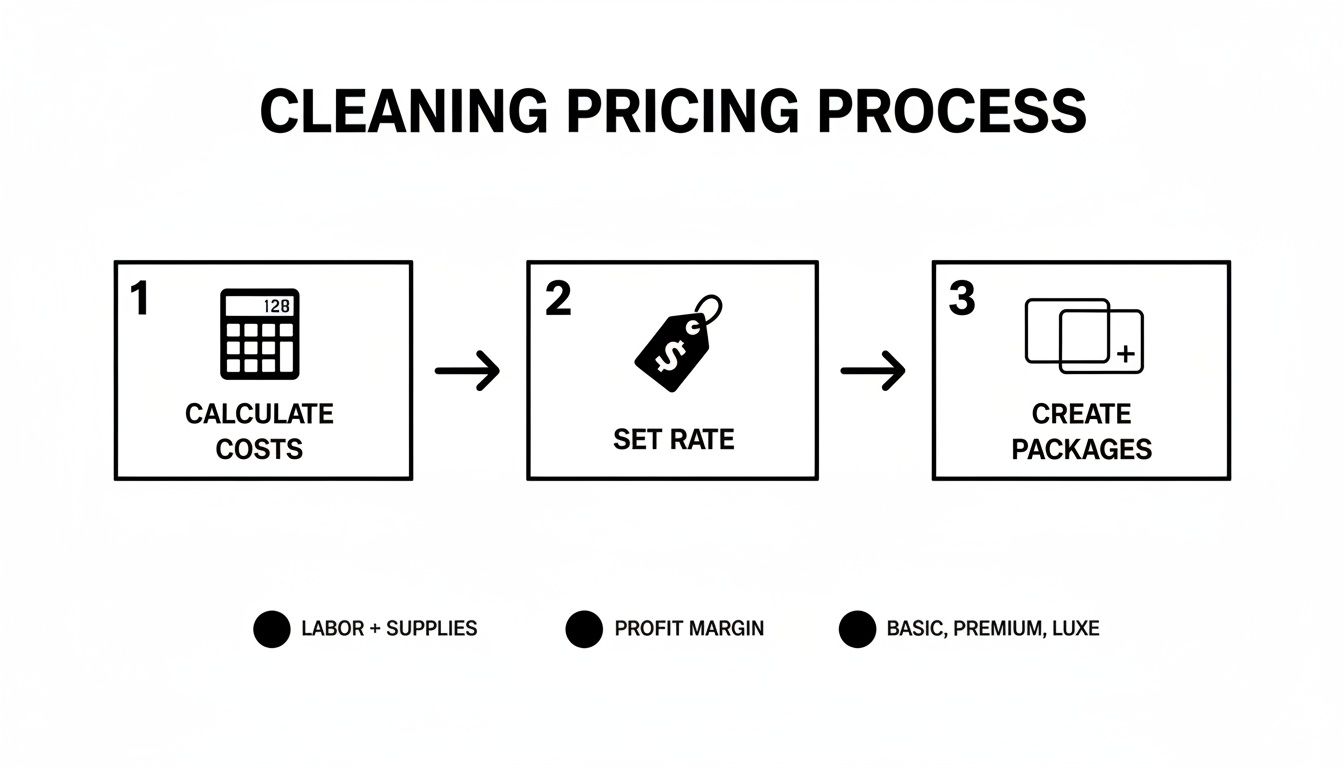
As you can see, a solid pricing strategy begins with knowing your costs inside and out. From there, you set a competitive rate and wrap it all up in attractive packages that make it a no-brainer for clients to say "yes."
From First Call to Loyal Client
Once the phone starts ringing (or the emails start pinging), your process for bringing on a new client is everything. This is where you make that brilliant first impression and lay the groundwork for a long-term, professional relationship.
It usually starts with that first email or call. Be prompt, friendly, and professional. Your only goal in this initial chat is to schedule an in-home consultation. Honestly, this is a non-negotiable step for new clients. It lets you see the space, truly understand what they need, and give them a quote you can stand behind. More than that, it shows you’re a thorough, serious professional.
My Two Cents: Treat the in-home consultation as your sales pitch. Show up on time, bring a checklist for your notes, listen more than you talk, and be ready for questions about your process, products, and insurance. This is how you build massive trust from day one.
Creating a Clear Service Agreement
After the walkthrough, once your potential client has given your quote the thumbs-up, there's one last thing to do before the first clean: the service agreement. This isn't about scary legal documents; it's about making sure everyone is on the same page, protecting both you and your client.
A good, simple agreement should clearly spell out:
- Scope of Work: A detailed checklist of exactly what's included in their service.
- Schedule: The agreed-upon day and time for recurring cleans.
- Payment Terms: Your rates, when payment is due, and any policy for late fees.
- Cancellation Policy: How much notice they need to give to cancel or reschedule without being charged.
Getting a client to sign this simple document prevents so many future headaches and cements your status as a real business owner. It's the final piece of the puzzle in turning a promising lead into a happy, paying customer who values your work.
Mastering Your Day-to-Day Operations
Once you’ve got a few clients on the books, your focus has to shift. It’s no longer just about winning the next job; it’s about keeping the ones you have. A fantastic reputation is built on one thing above all else: consistency.
Every single clean has to hit that high standard you promised. That’s what turns a one-off clean into a loyal, long-term client who tells all their friends about your amazing home cleaning service.
This is where your daily operations become your secret weapon. Having rock-solid systems for cleaning, scheduling, and managing supplies isn’t just about being organised. It’s about building a reliable, professional, and profitable business. A smooth operation lets you work smarter, not harder, and deliver that five-star quality time and time again.
The Power of a Perfect Checklist
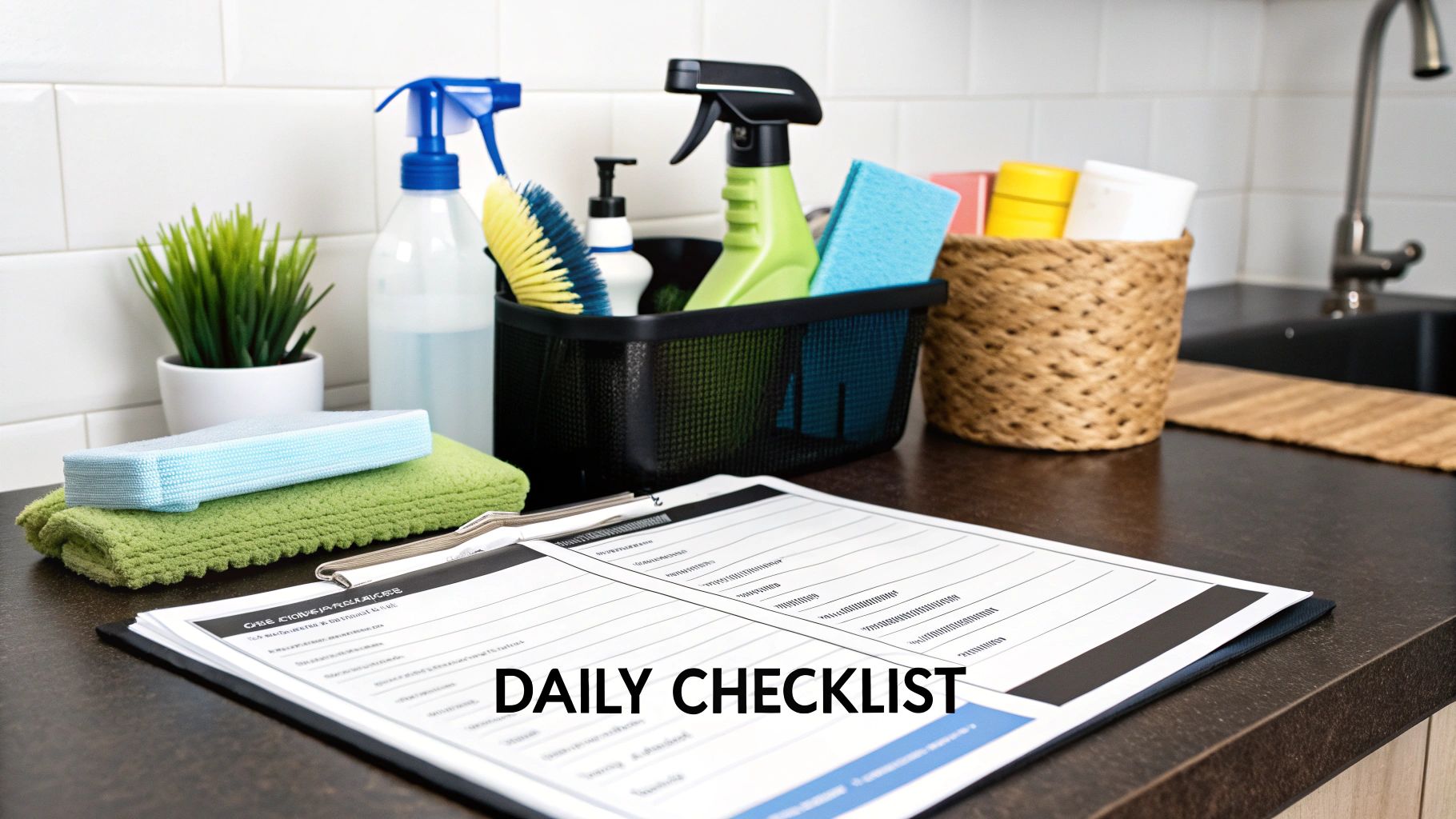
Don't ever rely on memory alone. I can't stress this enough. A detailed, room-by-room checklist is the single best tool you have for quality control. It standardises your work, making sure no corner is ever cut, whether you’re feeling on top of your game or having a bit of an off day.
Think of it as your professional blueprint for every home you enter. It needs to be thorough but simple, guiding you logically through a space—top to bottom, left to right. This systematic approach is what stops you from, say, dusting the shelves right after you’ve vacuumed the floor.
Here’s what a basic living room checklist might look like:
- High Dusting: Get rid of cobwebs in corners, dust ceiling fans, and wipe down light fixtures.
- Surface Cleaning: Dust and wipe down every surface, including shelves, tables, and even picture frames.
- Upholstery: Fluff and straighten cushions, then vacuum underneath them.
- Glass and Mirrors: Clean all glass surfaces until they're completely streak-free.
- Floors: Vacuum and/or mop, making sure to get right into the edges and under furniture.
My Two Cents: After your initial walkthrough with a new client, customise your checklist for their home. Make a note of specific requests, like using a particular polish on their antique dining table or giving extra attention to the corner where the dog sleeps. It shows you listen and genuinely care.
Smart Scheduling to Maximise Your Day
How you map out your week can be the difference between a profitable week and a frustrating one. Driving back and forth across town all day is a killer for your time and your petrol budget. The trick is to schedule geographically, grouping clients in the same neighbourhood on the same day.
When a new enquiry comes in, the first thing you should do is look at their address. If you're already in their area on Tuesdays, offer them a Tuesday slot. It’s that simple. This cuts down your travel time and lets you squeeze more paying work into your day. A simple digital calendar, like Google Calendar, with colour-coding for different areas makes managing this a breeze.
Keeping Your Supplies in Check
Running out of your favourite all-purpose cleaner halfway through a job doesn't just look unprofessional; it’s incredibly stressful. You can avoid this with some basic inventory management. You don’t need fancy software—a simple list in your phone's notes app or on a clipboard in your car is all it takes.
Just get into the habit of doing a quick stocktake at the end of each week:
- Check Levels: See which cleaning solutions are getting low.
- Inspect Tools: Check the state of your microfibre cloths, brushes, and mop heads. Are they getting worn out?
- Create a Shopping List: Jot down everything you need to restock for the week ahead.
This tiny habit ensures you're always prepared, makes your costs predictable, and saves you from those last-minute, overpriced trips to the supermarket.
Handling Feedback and Fixing Issues
Look, no matter how careful you are, mistakes can happen. A client might spot something you missed, or a misunderstanding might crop up. How you handle that feedback is a defining moment for your business.
Your response should always be quick, professional, and never defensive. Listen to their full concern without interrupting, apologise that their expectations weren't met, and immediately offer a clear solution. That might be popping back the next day to re-clean the area for free or offering a small discount on their next service.
When you act decisively and graciously, you don't just solve the problem—you actually build trust. It shows the client you stand by your work and value their satisfaction above all else. That, right there, is how you protect your hard-earned reputation.
Getting Paid Without the Hassle
You've done the hard part—the client is over the moon, and their home is spotless. Now for the bit that makes so many new business owners anxious: actually getting the money in your bank account. Chasing invoices is draining. It’s a frustrating time-suck that pulls you away from the work that actually makes your home cleaning service grow.
But here’s the good news: with a few solid systems in place, you can make getting paid a smooth, professional, and almost painless part of your routine. It’s time to say goodbye to that chaotic spreadsheet and stop spending your evenings wondering who’s paid and who hasn’t. A smart financial workflow isn't just about efficiency; it's about your cash flow and your peace of mind.
Why That Spreadsheet Is Costing You Money
When you're just starting out, tracking a few payments in a spreadsheet seems like a perfectly logical, no-cost solution. But as you bring on your second, third, and then tenth client, that simple sheet quickly becomes a tangled mess and a real source of stress. It’s way too easy to miss an overdue payment, forget to send a reminder, or lose track of what’s been paid versus what's still outstanding.
Those little oversights create big, unpredictable gaps in your income. This is why switching to a proper invoicing tool—even a simple one—is a complete game-changer. It gives you a clear, real-time dashboard of your business’s financial health, letting you see exactly what’s owed with just a quick glance.
Creating Invoices That Get Paid Faster
A professional invoice does a lot more than just ask for money. It communicates clarity, builds trust, and shows you're a serious business owner. Clients are far more likely to pay quickly when a bill is easy to understand and has all the information they need, leaving no room for questions or delays.
Every single invoice you send out needs to be clear, detailed, and professional. It's a direct reflection of the quality of your cleaning service.
Key Takeaway: An invoice isn't just a bill; it's the final touchpoint of your professional service. A clean, clear invoice encourages prompt payment and reinforces the value you've delivered—just like a perfectly cleaned home.
Think of your invoice as a final checklist for the client. The clearer it is, the faster you get paid. For an even deeper look into this, check out our guide on how to effectively track your freelance invoices to keep your cash flowing steadily.
Key Elements of a Professional Cleaning Invoice
To make sure your invoices hit the mark and don't leave clients guessing, they need to include some specific information. Leaving out key details is the number one cause of confusion and payment delays. This table breaks down what every invoice for your home cleaning service absolutely must include.
| Element | Description | Why It's Important |
|---|---|---|
| Your Business Details | Your business name, address, phone number, and email. | Instantly identifies you as the sender and gives clients a way to contact you with any questions. |
| Client Information | The client's full name and the address where the service took place. | Guarantees the invoice goes to the right person and documents the service location for your records. |
| Unique Invoice Number | A sequential number for each invoice (e.g., #001, #002). | This is crucial for your own bookkeeping and makes it easy for both you and the client to reference a specific bill. |
| Dates | The date the invoice was sent and the date the payment is due. | Clearly communicates your payment terms and sets a clear deadline for when you expect to be paid. |
| Service Breakdown | A line-by-line list of the services you provided, with costs for each. | Provides total transparency, showing the client exactly what they are paying for (e.g., "Bi-Weekly Standard Clean"). |
| Total Amount Due | The final total, in bold, including any applicable taxes. | This is the most critical piece of information on the invoice, and it needs to be impossible to miss. |
| Payment Instructions | Your bank details or other accepted methods of payment. | Makes it incredibly easy for the client to pay you by giving them all the necessary information right away. |
Handling Late Payments Politely but Firmly
Even with the most professional invoices, late payments are going to happen sometimes. The way you handle them says a lot about your business. The goal is to be persistent without being aggressive, which lets you maintain a positive client relationship while still getting paid what you’re owed.
Always start with a gentle nudge. A simple, polite email reminder sent a day or two after the due date is usually all it takes. Most of the time, people just forget; they aren't actively trying to avoid paying you.
Here’s a simple template you can adapt:
- Subject: Friendly Reminder: Invoice #007
- Body: Hi [Client Name], just a friendly follow-up to let you know that invoice #007 is now a few days overdue. You can find it attached for your convenience. Please let me know if you have any questions! Best, [Your Name].
If you still don’t see the payment after that first reminder, it’s time to be a little more direct. You might also consider applying a late fee, but only if that was clearly spelled out in your original service agreement. A simple tool like Billzy can actually automate these reminders for you, taking the awkwardness out of the process and letting you get back to what you do best—providing an exceptional home cleaning service.
Got Questions? Let's Get Them Answered
Diving into the world of professional home cleaning is exciting, but it's totally normal to have a million questions swirling around. Let's tackle some of the most common ones I hear from people just starting out. Here are some straight-up, practical answers to help you get going with confidence.
How Much Do I Really Need to Spend on Equipment to Start?
It's a common myth that you need to drop a fortune on equipment right out of the gate. Honestly, you can get a solid, professional setup for somewhere between €250 and €500. The real trick is to buy only what you absolutely need at first. Fight the urge to get all the fancy gadgets until you have a client who actually needs that specific service.
Your initial shopping list should be lean and mean:
- A high-quality vacuum cleaner: This is your workhorse, so don’t cheap out. Look for one with fantastic suction and a good set of attachments. It's an investment that pays off.
- A versatile mop system: I'm a big fan of flat-head mops with washable microfibre pads. They're way more efficient and hygienic than an old-school string mop.
- Colour-coded microfibre cloths: This is a pro move. Using different colours for different rooms (say, blue for glass, yellow for kitchens, red for bathrooms) prevents cross-contamination and shows clients you know what you're doing.
- Basic cleaning solutions: To start, all you really need is a great multi-purpose cleaner, a streak-free glass cleaner, and a solid bathroom disinfectant.
Let your business pay for its own growth. Once a client asks for deep carpet cleaning, for example, you can use that income to invest in the right machine for the job.
Do I Really Need a Formal Contract for Every Client?
Yes. Absolutely, one hundred percent. A simple service agreement is what separates a professional business from a casual side hustle. It’s not about being distrustful; it's all about making sure everyone is on the same page. A clear agreement is your best friend for preventing headaches and misunderstandings later on.
And it doesn't need to be some intimidating legal document. A straightforward, one-page agreement is perfect. Just make sure it clearly covers:
- The Scope of Work: A detailed checklist of exactly what tasks you'll be doing.
- The Cleaning Schedule: The specific day and time you'll arrive for recurring cleans.
- Your Rates and Payment Terms: How much you charge, when the invoice is due, and any fees for late payments.
- Your Cancellation Policy: How much notice a client needs to give if they want to reschedule or cancel without being charged.
Having every new client sign this document sets a professional tone from the get-go. It shows you take your work seriously and helps manage expectations—which is the secret to a great, long-lasting client relationship.
What’s the Best Way to Handle a Client Complaint?
Look, no matter how amazing you are, you'll eventually get a complaint. It happens to everyone. How you react in that moment is what matters. It's a golden opportunity to prove your professionalism and, believe it or not, build even stronger loyalty. The goal is simple: listen, understand, and fix it. Fast.
First, just listen. Let them get it all out without jumping in to defend yourself. Then, offer a sincere apology that their expectations weren't met. This small gesture goes a long way. Ask a few questions to make sure you understand exactly what the issue is.
Finally, offer a solution right away. This could be anything from popping back to re-clean the missed spot for free, giving them a discount on their next service, or even offering a partial refund. Acting quickly and graciously can turn a bad experience into a story they'll tell others about your fantastic customer service.
When Is It Time to Hire My First Helper?
The thought of hiring someone can feel like a massive step, but there are some very clear signs that it’s time. The biggest one? You're so busy you're regularly turning away new clients. If your schedule is booked solid for weeks, you're literally turning down money.
Another sign is when you realise you're spending more time on admin than you are on actual, billable cleaning. If the paperwork is getting in the way of your growth, it’s time for a hand. Before you post an ad, just make sure your revenue is consistent enough to comfortably cover their wages. A great way to ease into it is by bringing on a part-time subcontractor for a few jobs. It lets you meet the growing demand without the immediate commitment of taking on a full-time employee.
Ready to stop chasing payments and get your cash flow under control? Billzy is the simple invoice tracking tool designed to help you get paid faster, without the stress. See what’s paid, pending, and overdue at a glance. Learn more and start your trial at Billzy today!
Ready to Get Paid Faster?
Create professional invoices and track payments in seconds with Billzy.
Start Free Today